That provides a differentiation for standard primary care centers. According to MGMA information, the median overall number of encounters in family medicine centers without obstetrics services decreased 9.9 percent between 2015 and 2018. The mean relative value units (RVUs), however, decreased just 0.3 percent. Those numbers suggest that while medical professionals are seeing fewer clients, they're seeing more intricate patients and cases."I think the majority of people want a relationship with a physician who will really handle their care carefully," Hajde states.
Increased access points for consumers can be a good thing, especially in rural locations where there is a lack of medical care companies, says Gary LeRoy, MD, a family doctor in Dayton, Ohio and president of that American Academy of Family Physicians (AAFP)."The ultimate goal would be to provide extensive longitudinal collaborated look after clients from coast to coast, east to west, north to south.
And these retail health-type centers can often provide the needed immunizations and health care information that underserved areas remain in desperate need of."This increased gain access to can cause fragmented care, however, because retail clinics do not have a system for sharing records and patients don't constantly remember what occurred throughout a see or assessment."If you get a vaccine at a CVS or some other freestanding center, and you do not supply a copy of the documentation they provide to you to your medical care physician, it can create a gap in care," Hadje states.
You ask somebody what medications they're on, they do not understand. They say they take one blue pill, one red tablet, one white tablet."Probably among the things that frustrates physicians more than anything else is when they have to see clients and they do not have a complete copy of their medical record for all the centers they've been to.
She was initially told it was allergic reactions, then bronchitis. They put her on multiple medications. But Abraham identified an understood from her records that the client had had breast cancer more than 20 years previous and identified her with a pulmonary embolism. If she 'd pertain to Abraham earlier, the embolism might have been found earlier.
Rather they go to the expert and the PCP falls out of the loop of care."We don't want to develop a circumstance like with relay races, where individuals lose due to the fact that they drop the baton handoff," LeRoy says. "That's basically what's taking place here. You put more runners in the race, there are more chances to hand off the baton-and more opportunities to drop the baton since they're not successfully practiced in handoffs."Healthcare customers have ended up being used to getting the products and services they want where and when they want them; they expect the very same from their health care companies."Healthcare shipment in standard centers really is going to need to evolve to be quicker, much better, cheaper and faster in order for people to be pleased with it.
Primary care doctors need to listen to their patients and take a look at ways to meet consumers' requirements https://www.google.com/maps/d/edit?mid=1nXG2g-PHsXqENJONW0T1GeKlH9jvZhDG&usp=sharing within conventional practices, states Michael Munger, MD, with St. Luke's Health System in Kansas City."The onus is on primary care physicians to deliver what our patients require," he states. "How can I make certain I'm readily available to patients? Often that might be as straightforward as ensuring you have somebody on call for your practice 24 hr a day, 7 days a week.
Not known Incorrect Statements About What Is It Like To Work At Naval Health Clinic Quantico Va
Possibly you'll just tell them they need to be seen in immediate care, but if they've communicated with you before they go, you know that you have something to follow up with. You know you need to close the loop."Medical care clinics need to produce methods for patients with intense diseases to be seen that very same day.
Munger keeps in mind that many family physicians nationwide have currently instituted some kind of advanced access, extended hours or ability for walk-in and same-day availability. Strong relationships with clients and remarkable general client service can form the bonds that bring them back to your practice for all their requirements. That indicates making sure your clinic is completing on a technological level.
"Those are all things that if they can't meet that need, it's going to be truly hard for conventional centers to take on these retail and immediate care clinics."LeRoy and Munger say establishing relationships with local urgent care and retail centers can be useful for standard healthcare clinics, too."If I'm a family doctor and I have an independent practice, I would be reaching out to the retail centers around me and making sure I let them know I'm here if my patient appears," Munger states.
They can be part of that community, but we have to talk with each other."Greater cooperation between companies would assist deal with the fragmented care. However the universal technology isn't there yet. So the burden for quality, continuous care also is up to patients."Pressing consumers to end up being more accountable for their own personal health and care will be substantial moving into the future," Hajde says.
To assist that occur, primary care physicians ought to speak to their patients about when to go to a retail or urgent care center, and they ought to emphasize the importance of properly and completely communicating what happened during those check outs to their medical care physician."That's the best method to guarantee care is collaborated," he states - how to create a resume for health clinic specialist to apply to public school.
"However it's a two-way street. [Retail centers] require to understand what we do and comprehending that just due to the fact that it is called medical care, doesn't indicate that it's easy care, because there's nothing simple about what we do.".
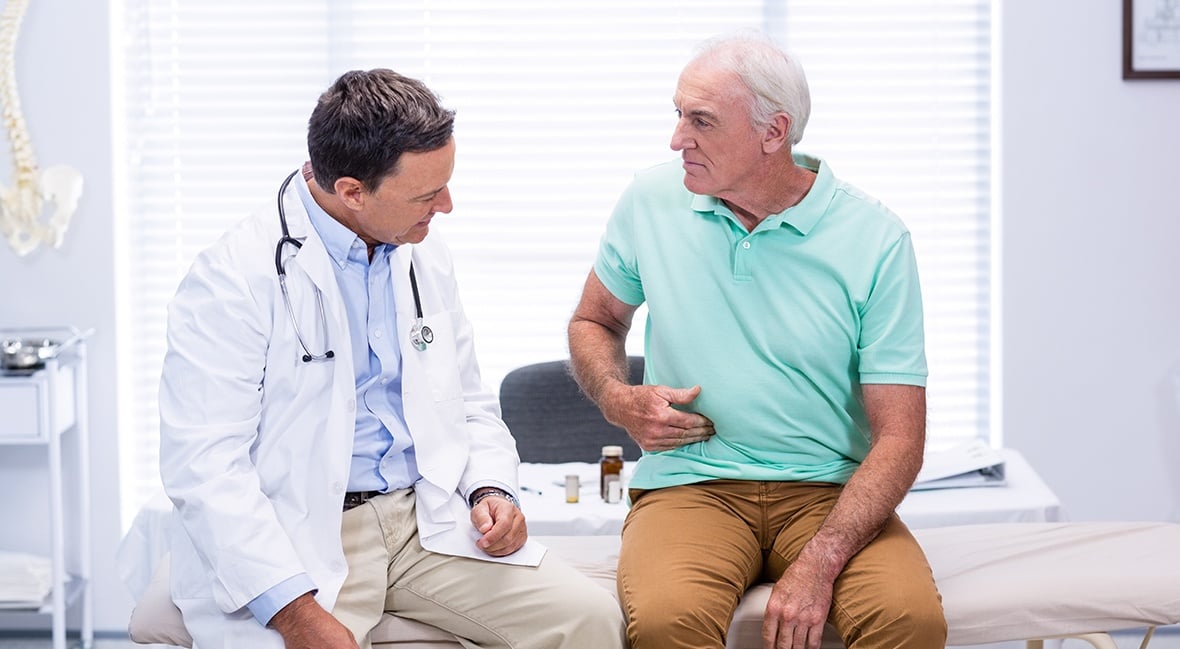
With the boom of on-demand healthcare, lots of kinds of immediate care are now offered to patients. However, the patient can be confused by which location of treatment they need to look for. And it's not surprising, offered the similar-sounding names for varying care. How do you help patients comprehend the difference in between walk-in retail clinics and immediate care centers? To help patients pick the appropriate care, it's your task as an immediate care center to inform patients about the differences between your urgent care and the alternatives.

The Ultimate Guide To What Health Insurance Does The Cleveland Clinic Accept?
Consider including a services checklist that distinguishes in between what your clinic offers vs. others for fast contrast. Here's a quick summary you can share with clients about the distinctions between walk-in retail and urgent care centers. "Walk-in" is a bit of a misleading term. Both retail and urgent cares are "walk-in" or "no visit required".
Retail centers fill the requirement for fast, less complicated health needs that can be served outside the physician's workplace or urgent care. Solutions include treatment of uncomplicated disease, such as a sore throat or earache, or preventative care like vaccines or physical examinations. In addition, retail centers are usually a clinic-within-a-store model with minimal area, and are staffed by nurse professionals or doctor assistants. She was emphatic about having a physician who understood her name and cared to ask her viewpoint. Millie was not ready to get a flu shot at a retail clinic, so there is no doubt she would not seek care at one when she was ill. In reality, I visited her house to give her the influenza vaccine myself over the years.
It is during one of those house sees when I initially learned Millie had lost her daddy to influenza during the epidemic of 1918. It seems perverse to deliver healthcare services at a place called the MinuteClinic. The type of physician-patient relationship that can be cultivated in a minute is not one to compose home about. how to open a mental health clinic.
Seamless environments are no match for a "willingness to position expert proficiency at the feet of childhood magic." The bond Millie and I shared was wonderful. And every patient is worthy of a physician who knows their name. Niran S. https://www.google.com/maps/d/drive?state=%7B%22ids%22%3A%5B%221ZtwGCvYZVXUIw5ss-Uofj9GY38Tp3pks%22%5D%2C%22action%22%3A%22open%22%2C%22userId%22%3A%22106999669032061189234%22%7D&usp=sharing Al-Agba is a pediatrician and can be reached at her self-titled site, Dr.
An outpatient clinic located in a grocery, drug shop, retailer, or grocery store. It provides a focused variety of protocol-driven health care services, such as the treatment of minor health problems or injuries, and the administration of vaccinations.
Insights by: Dennie KimWritten by: Andrew Sell In a recent White Home rundown, a number of business leaders were present as the president stated a nationwide emergency. You may not have actually acknowledged a few of them, however they were leaders of a number of large corporations (e.g. Target, CVS, Walgreens, Walmart) that are coordinating with federal government agencies in an effort to "flatten the curve" of COVID-19.
The actions they take as crucial players in healthcare delivery will have a significant impact on public safety, and their speedy actions aim to avoid the illness from frustrating our healthcare system. Even ten years ago, we would not be speaking about retail health centers having such a crucial function in public safety.
The Facts About Sewnee Health Clinic Where? Revealed
It is not simply their unusual area that makes them various from other centers and medical professional's offices at a retail clinic, you probably won't see a medical professional at all! Rather, patients of a retail center will probably be treated by a nurse practitioner or doctor assistant. This kind of healthcare shipment just came onto the scene in 2000 in Minnesota as a pilot called "QuickMedx." Very rapidly this innovative brand-new type of healthcare shipment, including a nontraditional physical space and nontraditional medical specialists, took hold nationwide.
Filling a Space, Establishing TrustIn the previous years, retail clinics have actually ended up being a lot more widespread, in addition to more accepted by individuals as a genuine location to go see a doctor. This type of health care filled a requirement in the market for hassle-free, prompt and premium medical care treatment, resolving long-lasting problems of access to fundamental healthcare services in numerous communities.
Now, this success puts them on the frontlines of challenging a pandemic that is checking the limitations of our current healthcare infrastructure. "The U.S. reaction to COVID-19 shines an intense light on problems of gain access to and capability in the existing healthcare delivery facilities an inadequacy that retail clinics have actually been trying to address because their beginning in 2000," says Professor Dennie Kim, who concentrates on health care shipment and reform and has been studying the spread of retail centers in cooperation with Professors Roman Galperin at the Johns Hopkins Carey School of Company and Gurneeta Vasudeva Singh at the University of Minnesota's Carlson School of Management.
We see that these clinics are presently playing an essential function in the action, helping in reducing the load on medical facilities by providing standard health care services in stores where individuals are going shopping for requirements and keeping individuals home through telemedicine." Swiftly Sharing Responsibility for Public SafetyWith over 3,000 places, the nationwide distribution of retail health centers permits large-scale coordination throughout states in an effort to protect the neighborhoods they serve from the COVID-19 hazard.
For example, CVS Health and MinuteClinic have taken numerous procedures to safeguard its stakeholders throughout the COVID-19 break out consisting of: Offering bonuses and other advantages to lots of present retail staff members, along with hiring thousands of new full-time and part-time staff to deal with an increased need for healthcare services. All appointments are to be set up online to prevent infections from unscheduled walk-in visits among clients - what is a health clinic.
They might get guidance to instead visit a different health care setting that better fulfills their needs offered the patient's specific situations. Video gos to are being interacted as the most safe method for clients to communicate with medical experts when possible. Retail Clinics in the Days AheadThe existing circumstance may make patients, and healthcare specialists, a lot more comfortable with these more novel methods of getting healthcare services.
" Anything that enables clients to look for medical guidance while minimizing volume at healthcare facilities and reducing unnecessary direct exposure and spread will contribute to 'flattening the curve.'" With their strong value proposition, retail clinics rapidly filled a need in our health care system for a narrow set of services. Present events demonstrate that they are now an essential gamer in dealing with a pandemic that threatens community health and there is proof that retail business have an interest in expanding their health care offerings (e.g., Walmart University Hospital, CVS Health).
10 Easy Facts About When Did First Health Run A Clinic In Goldston Nc Explained
Hunter, Lauren P. PhD, CNM, WHCNP1, a; Weber, Charles E. PharmD (Specialist) 2, b; Morreale, Anthony P. PharmD, MBA3; Wall, James H. CPhT4, c aAssociate Professor and Nurse-Midwife Program Director bDirector, Financier Relations cPharmacy Professional and Undergraduate Student 1San Diego State University, College of Health and Human Providers, School of Nursing, San Diego, California 2Pacific Enterprises, La Jolla, California 3MediMin Inc., La Jolla, California 4University of the Pacific, Stockton, California Lauren P.
Tel: 858-454-9033; Email: Gotten: July 2008; accepted: September 2008 Dr. Hunter, Dr. Morreale and Dr. Weber all own stock in MediMin. Dr. Morreale is the Diretor of Financier relations for MediMin. doi: 10.1111/ j. 1745-7599.2009.00447. x.
June 28, 2018 - Retail centers are acquiring in appeal among patients trying to find fast, hassle-free look after minor ailments. Kiosks and no-appointment-needed workplaces located in corner drug stores and huge box stores have the potential to keep clients out of pricey emergency rooms or hectic medical care suppliers. Yet concerns about overutilization for problems that might not require any treatment at all can hold payers back from providing repayment for these services.
Currently there are over 2000 retail clinics across the United States. This number is expected to grow as pharmacy chains and other sellers begin to see returns from their financial investments in these clinics. Retails centers are often puzzled with urgent care centers, but the two types of companies supply different services.
Retail clinics normally utilize licensed nurse practitioners (NPs) and/or doctor assistants (PAs) to administer treatment. Self-reliance Blue Cross discusses that retail centers can be useful for beneficiaries looking for relief from cuts and external injuries, cough or aching throat, ear and sinus discomfort, minor fevers, or rashes. An immediate care center is a medical center that generally utilizes doctor assistants and nurse professionals that are overseen by board-certified doctors.